- Explore a Different Approach to Focus and Self-Regulation
Neurofeedback Therapy in Newport Beach for ADHD Relief
Imagine watching a screen respond to activity happening inside your brain. You aren’t solving a puzzle or forcing yourself to concentrate. Sensors measure brainwave activity, and the feedback changes as your brain activity shifts. That’s what makes neurofeedback different from traditional talk therapy.
I’m Lisa Enneis, a Licensed Marriage and Family Therapist with more than 35 years of clinical experience and co-author of Autism, ADHD & Neurofeedback. At my Newport Beach practice, I help individuals and families explore neurofeedback therapy for concerns involving attention, stress, emotional regulation, and everyday functioning. When you come to me with questions about neurofeedback, I want to understand what you’re experiencing, what you’ve already tried, and what meaningful improvement would look like in your life.
- California LMFT #30245
- 35+ Years of Experience
- Co-Author, Autism, ADHD & Neurofeedback
- How It Works
What Is Neurofeedback Therapy and How Does It Work?
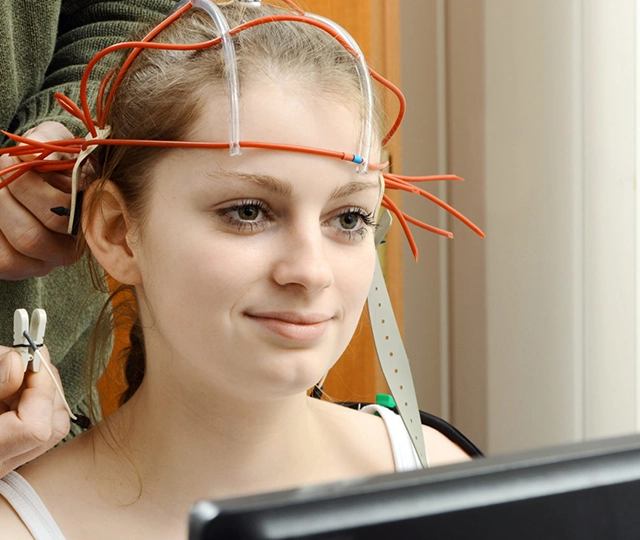
Neurofeedback is a form of biofeedback that uses sensors to measure brain activity and provide feedback through a computer. During EEG neurofeedback, sensors placed on the scalp record electrical signals. The computer translates those measurements into visual or auditory feedback, such as changes in a video, animation, or sound.
This feedback creates opportunities to practice responding to patterns in brain activity. Unlike traditional counseling, which involves therapeutic conversation, neurofeedback uses real-time measurements during training. The procedure is noninvasive, and conventional EEG sensors record activity without sending electrical stimulation into the brain. I help clients understand the process and discuss how neurofeedback treatment may fit their individual concerns and goals.
- Common Goals
What Clients Often Work On With Neurofeedback Therapy
People consider neurofeedback for different reasons. Some want help with attention, while others are interested in managing emotional reactions or improving everyday routines.
Common goals discussed in neurofeedback treatment include:
Focus During Tasks
Working toward greater consistency when completing schoolwork, professional responsibilities, or everyday activities.
Emotional Regulation
Exploring ways to respond more calmly when emotions become difficult to manage.
Stress Responses
Developing greater awareness of patterns connected to tension and overwhelm.
Sleep-Related Concerns
Discussing difficulties with settling down, maintaining routines, or feeling rested.
Transitions and Adaptability
Supporting goals related to changes in activities, expectations, and daily routines.
These are potential treatment goals rather than guaranteed outcomes. During a consultation, we can discuss which concerns are relevant to you and how progress would be evaluated.
- What to Expect
What Happens During a Neurofeedback Treatment Session?
If you’ve never experienced neurofeedback, you may wonder what you’ll actually do during an appointment. Although the exact procedure depends on the equipment and protocol, EEG neurofeedback generally involves four stages.
Discussing Your Concerns and Goals
I begin by understanding your current challenges, relevant history, and reasons for exploring neurofeedback. We discuss what you’ve already tried and identify the changes you’d like to see in daily life.
Recording Brain Activity
During training, sensors are positioned on the scalp to measure electrical activity. The computer processes these signals and uses them to generate feedback.
Participating in Neurofeedback Training Sessions
You may watch images or listen to sounds that respond to the recorded activity. The feedback is designed to provide repeated training opportunities without requiring you to consciously control individual brainwaves.
Reviewing Your Everyday Progress and Results
We consider whether you’re noticing meaningful changes in the areas identified at the beginning of treatment. Progress reviews may involve discussing attention, emotional responses, daily routines, or observations from parents and caregivers.
- Who It May Help
Who May Benefit From Neurofeedback Therapy?
Neurofeedback is considered for different concerns, but the decision to begin should reflect the person’s needs, history, and ability to participate comfortably.
Support for Attention and Concentration Challenges
Some children, teenagers, and adults explore neurofeedback because they struggle with distractibility, impulsivity, or completing tasks. Neurofeedback may be considered alongside established ADHD care rather than as an automatic replacement. For practical counseling focused on attention, routines, and emotional challenges, explore my ADHD Therapy services.
Neurofeedback Therapy for Anxiety and Stress
Persistent tension, racing thoughts, and difficulty relaxing can affect concentration, sleep, and everyday responsibilities. People sometimes explore neurofeedback for anxiety because they want to better understand self-regulation and stress responses. I consider these concerns in the context of the person’s broader emotional well-being and existing care. For additional support, learn more about my anxiety and stress counseling services.
Autism and Sensory Processing Support
Families may ask about neurofeedback when a child experiences sensory sensitivities, difficulty with transitions, or emotional regulation challenges. I consider the child’s developmental needs, comfort with the procedure, and existing support services when discussing treatment options. You can also explore my autism and sensory processing services.
- Evidence & Expectations
What Does Research Say About Neurofeedback Therapy?
Neurofeedback has been studied for attention, anxiety, sleep, and emotional regulation. Results vary by condition, training protocol, and individual. Some studies report benefits, while more rigorous ADHD trials have found smaller or inconsistent effects.
That’s why I approach neurofeedback as a possible part of a broader care plan, with clear goals and attention to meaningful changes in daily life—not simply brainwave measurements. Neurofeedback is not a guaranteed treatment or a replacement for established medical and psychological care.

Co-Author, Autism, ADHD & Neurofeedback
A publication exploring neurofeedback and developmental concerns.
- Comparing Approaches
Neurofeedback Therapy vs. Traditional Counseling
Neurofeedback and psychotherapy can address related concerns, but they use different methods.
Neurofeedback Therapy
- Uses sensors and computer-based feedback
- Focuses on training responses to measured brain activity
- Involves specialized equipment
- Progress is reviewed against identified training goals
Traditional Counseling
- Uses therapeutic conversation and psychological interventions
- Explores thoughts, emotions, behavior, and relationships
- May be offered in person or through telehealth
- Progress is reviewed against counseling and behavioral goals
Depending on your needs, we can discuss whether neurofeedback, counseling, or a combination of approaches is appropriate.
- Your Consultation
How Do I Know If Neurofeedback Therapy Is Right for Me?
The best starting point is a conversation about what you’re experiencing.
I want you to understand what treatment would involve before making a decision. If another service is more appropriate, we can discuss the next steps.
What We Discuss During Your Neurofeedback Consultation
- The specific concerns you'd like to address
- Previous assessments and treatments
- Your goals for attention, emotional regulation, or daily functioning
- Whether additional medical or psychological evaluation is appropriate
- How progress would be monitored
- Appointment availability, expected time commitments, and costs
- Clinical Experience and a Personal Approach
Why Choose a Newport Beach Therapist for Neurofeedback?
I’m Lisa Enneis, a Licensed Marriage and Family Therapist in Newport Beach, California. With more than 35 years of clinical experience, I understand how attention, emotional regulation, behavioral concerns, and family relationships can influence everyday life. I also co-authored Autism, ADHD & Neurofeedback, a publication exploring neurofeedback and developmental concerns.
Licensed Therapist
California LMFT License #30245.
Extensive experience supporting individuals and families with emotional and behavioral concerns.
Published Neurofeedback Resource
Co-author of Autism, ADHD & Neurofeedback.
Individualized Guidance for Every Client
Consultation focused on your concerns, treatment goals, and practical expectations.
- Frequently Asked Questions
Frequently Asked Questions About Neurofeedback Therapy
Conventional EEG neurofeedback is noninvasive. Sensors record electrical activity from the scalp without applying electrical stimulation. Some people may experience mild discomfort from sensor placement.
The number of sessions depends on your goals, the training protocol, and your response. We can discuss the proposed schedule and progress reviews during a consultation.
Neurofeedback should not automatically replace prescribed medication or established ADHD treatment. Medication changes should be discussed with your prescribing clinician.
Some children may be candidates, depending on their developmental needs, sensory sensitivities, and ability to participate comfortably.
Brain mapping and QEEG are separate assessment procedures that may be used by some neurofeedback providers. Please contact my office to confirm whether these assessments are available and appropriate for your needs.
Neurofeedback generally involves specialized equipment during training. Please contact my office to confirm current in-person neurofeedback arrangements and whether any remote options are offered.
You can ask about the equipment used, Lisa’s neurofeedback-specific training, session length, treatment frequency, fees, and how progress will be evaluated.
- Take the Next Step
Explore Neurofeedback With a Newport Beach Therapist
You may be considering neurofeedback because attention, stress, sleep, or emotional regulation challenges have become difficult to manage. You deserve to understand your options and feel comfortable asking questions before beginning treatment.
If you’re interested in neurofeedback therapy in Newport Beach, I welcome the opportunity to learn about your concerns and discuss what might be appropriate for you.